
Have a Project in Mind? Contact Us Now
Call Us Now: (862) 271-1225
Email Us: njgoldstarconstruction@yahoo.com


Roof Replacement in Totowa NJ: What Happens, Day by Day
A full roof replacement in Totowa NJ runs on a sequence, and this page walks it in order: measure-up, protection, tear-off, deck inspection, underlayment, shingles, ventilation, cleanup. You will know what the crew is doing each day and what your driveway looks like while it happens. Call to put a date on the calendar.

A Fixed Start Date, And The Roof Dried In Before We Leave Each Night
A Date, Not A Window
You get a start date and an expected finish, plus what the crew is doing on each of those days, agreed before any material is ordered.
Dried In Before We Leave
No slope is left open overnight. Whatever is stripped that day is underlaid and dried in before the crew packs up, whatever the forecast says.
Decking Priced Per Sheet Upfront
Bad sheathing only shows once the roof is bare. The per-sheet rate is written into the contract first, so a mid-job discovery is arithmetic and not a negotiation.
Magnet Sweep And Walk-Through
The last hour is cleanup: magnets over lawn and driveway, gutters cleared of nails and grit, then a walk of the perimeter with you before the truck moves.
TWO LAYERS SHOWING AT THE EAVE
Stand under the gutter and look at the cut edge above the drip line. If you can count two courses of shingle stacked there, a third layer is not going on.
TABS CUPPED AND CURLED EVERYWHERE
Curling at the corners on one slope is weathering. The same cupping on every elevation, front and back, north and south, is a covering at the end of its run.
A DIP OR WAVE ALONG THE RIDGE
Sight down the ridge line from the far side of the street. A sag, a hollow between rafters, or a wave in the plane means the deck is carrying water damage.
SPONGY DECK UNDERFOOT ON THE ROOF
Anyone who has walked your roof recently and mentioned it felt springy has told you something important. Soft sheathing does not get fixed from above with a patch.
SIGNS YOU MAY NEED A FULL ROOF REPLACEMENT
Replacement is a bigger call than a repair, and it should be made on evidence you can see rather than a salesman opinion. These four are the ones that usually settle the argument on a Totowa house.
WHAT WE DO
OUR ROOF REPLACEMENT SERVICES
01
Measure-Up And Site Protection
Before a date is set we measure the planes, count the penetrations and agree the material. On the morning of day one the crew tarps the plantings, sheets the siding below the eaves, covers windows and clears the driveway for the dumpster. Cars come out of the garage first, because the drive is where the debris lands.
02
Tear-Off And Deck Repair
Stripping starts at the ridge and works down, one slope at a time, straight into the dumpster. With the deck bare we walk every square foot looking for delamination, rot at the rafter tails and sheathing that has gone soft under an old leak. Anything failed comes out and is replaced with new, and you see it before it is covered.
03
Underlayment, Edge Metal And Flashing
Ice barrier goes down at the eaves and up through the valleys first, then underlayment across the field, then drip edge at the eave and rake. Step flashing gets replaced with new metal rather than bent back and reused, because reused flashing is where a new roof leaks in its second winter. This is the layer nobody sees.
04
Shingles, Venting And Final Sweep
Courses run up from the starter strip on a set nailing pattern, cut in around chimneys, pipes and skylights as they go. While the ridge is open we set the exhaust venting and check the intake at the soffit, since that is the only moment it is easy. Last comes the magnet sweep, the gutter clear and your walk-round.
The Benefits of a Planned Day by Day Roof Replacement
-
Knowing the running order means you can plan around it: the noisy day is tear-off, the quiet days are the ones after, and nobody has to leave the house.
-
Bare deck is the one chance in thirty years to see the structure. Rot found and cut out then costs a few sheets; found later it costs a ceiling as well.
-
Tearing off rather than laying over keeps the weight down and lets the underlayment and ice barrier sit on wood, which is where they are meant to sit.
-
Sequencing around the forecast matters in North Jersey. Work is broken into slopes that can be dried in the same day, so an afternoon storm does not reach your ceilings.
-
Gutters, satellite dishes and solar mounts come off and go back on properly, with new flashing at the penetrations rather than the old holes sealed and hoped over.
-
Cleanup done to a routine means nails end up in the dumpster instead of a tire or a bare foot, and you are shown the perimeter before the crew leaves.

ROOF REPLACEMENT GUIDE
A roof replacement in Totowa, NJ begins with site preparation, including protection of property and debris containment. Day one involves tearing off old shingles to expose the deck for thorough inspection and necessary repairs. Installation proceeds with underlayment, ice barriers, and drip edges before shingle application, ensuring weather resistance and ventilation. Final steps include cleanup, magnetic nail removal, gutter clearance, and quality inspection. Coordination, safety, and scheduling are key factors influencing the process timeline. Further details clarify each phase’s specifics.
What a Tear-Off Looks Like From Your Totowa Driveway
Prior to scheduling a roof tear-off, a thorough measurement and assessment determine the project scope and necessary preparations.
Protective measures are installed to shield plantings, siding, windows, and the driveway from debris and equipment impact. These steps ensure the site remains secure and undamaged throughout the removal process.
The Measure-Up and the Decisions Made Before a Date Is Set
Although the tear-off date is a milestone in the roof replacement process, it is preceded by an extensive measure-up that establishes the foundation for all subsequent work. This process involves a detailed inspection to assess roof condition, precise measurement of dimensions, and identification of existing damage.
Material options are thoroughly discussed, enabling homeowners to make informed decisions aligned with their needs. Prior to scheduling tear-off, the contractor finalizes scope and cost considerations.
This preparatory phase ensures clarity and readiness, setting clear expectations for the project while reinforcing the homeowner’s role in the collaborative roof replacement process.
Protecting Plantings, Siding, Windows and the Drive
A roof tear-off begins with the meticulous protection of all vulnerable areas surrounding the home, including plantings, siding, windows, and the driveway.
Protecting plantings involves covering shrubs and flowerbeds with durable tarps to prevent debris damage. Siding and windows receive shielded barriers to avoid scratches or impact marks from falling materials.
The driveway is likewise safeguarded by heavy-duty mats or tarps to withstand foot traffic and equipment placement. Dumpsters and forklifts positioned on the driveway facilitate efficient debris removal while minimizing surface damage.
This thorough approach ensures a controlled, damage-free environment throughout the roof replacement process.
Tearing Off Versus Roofing Over the Existing Layer
When evaluating whether to tear off an existing roof or to install new shingles over the current layer, several technical and regulatory factors must be considered. Roof tear off Totowa often allows thorough deck inspection and repair, essential for long-term durability. Roofing over existing shingles NJ can save time and money but may shorten roof lifespan and complicate future repairs. Local codes limit layers, frequently requiring tear off. The tear off vs roof over decision balances immediate cost against future performance.
AspectTear Off
InspectionFull deck inspection
CostHigher upfront
Longevity & RepairsBetter long-term durability
Day One: Stripping the Roof Back to Bare Deck
On Day One, managing debris removal and maintaining yard accessibility are critical to an efficient roof replacement process. The crew implements systematic methods to contain and transport stripped materials while minimizing disruption to the property.
-
Placement of protective tarps and dumpsters
-
Controlled debris removal pathways
-
Regular site cleaning to prevent hazards
-
Temporary walkways to safeguard landscaping
-
Where the Debris Goes and How the Yard Stays Walkable
Day one of a roof replacement in Totowa NJ begins with the systematic removal of old shingles and roofing materials, revealing the bare deck underneath.
Debris removal is managed carefully; shingles, nails, and sheathing scraps are collected and deposited into designated dumpsters on-site.
Yard protection measures include laying tarps and protective coverings around the work zone to catch falling debris and safeguard landscaping.
Roofing cleanup is continuous throughout the day, preventing accumulation of loose materials.
This ensures the yard remains walkable and safe, maintaining clear pathways for both homeowners and crew amid the ongoing roof replacement process.
The Deck Inspection Nobody Sees and Everybody Pays For
During roof replacement, inspection of the decking reveals common issues such as soft sheathing, delamination, and rot at the rafter tails that are not visible from the surface.
These conditions compromise structural integrity and often necessitate sheathing replacement, which is classified separately from ordinary maintenance under N.J.A.C. 5:23-2.7.
Identifying these defects early is essential to avoid unexpected project scope changes and permit complications.
Soft Sheathing, Delamination and Rot at the Rafter Tails
A critical yet frequently overlooked aspect of roof deck inspection involves evaluating the condition of the sheathing and rafter tails for signs of softening, delamination, and rot. These defects often develop beneath roofing materials, hidden from routine observation.
Prolonged moisture exposure—from leaks, damaged flashing, or poor ventilation—initiates wood decay, compromising structural integrity. Soft sheathing and delamination reduce load-bearing capacity, while rot at the rafter tails threatens overall roof stability.
Accurate detection requires removing roofing layers to assess these areas thoroughly. Failing to address such damage increases repair costs and shortens roof lifespan, underscoring the necessity of this detailed inspection.
Why Replacing Sheathing Is Not Ordinary Maintenance
Although routine roof maintenance focuses on inspecting and repairing visible damage, replacing roof sheathing represents a distinct and far more complex procedure. The roof decking inspection uncovers underlying issues like rot or delamination caused by water intrusion, necessitating sheathing replacement.
This critical step in the roof replacement process involves removing and reinstalling large decking sections, requiring specialized skills and equipment. Unlike ordinary maintenance, it addresses structural integrity, ensuring a stable foundation for new roofing materials.
Homeowners often overlook this costly yet essential phase, which prevents future leaks, energy loss, and extensive repairs, underscoring its importance beyond routine upkeep.
The Layers That Go On Before a Single Shingle Does
Before shingles are applied, critical preparatory layers are installed to ensure effective moisture management and structural integrity. These include an ice barrier along the eaves and valleys, a drip edge to control water runoff, and a starter course that sets the stage for shingle alignment.
Additionally, new step flashing is installed at roof-wall intersections to prevent leaks, replacing any reused flashing to maintain waterproofing standards.
Ice Barrier at the Eaves and Through the Valleys
When temperatures drop and ice forms along roof edges, water backup from melting snow can penetrate vulnerable areas, making the installation of an ice barrier essential.
During the roof replacement process, a self-adhesive membrane of rubberized asphalt is precisely applied at the eaves and extended through the valleys. This flexible layer adheres directly over the roof deck, creating a waterproof seal that prevents ice dam-related leaks.
In Totowa NJ, incorporating an ice barrier beneath shingles is a critical best practice, reinforcing the roof’s defense against winter moisture intrusion and ensuring long-term durability in these high-risk zones.
Drip Edge, Starter Course and the Rake Detail
Following the application of the ice barrier at the eaves and valleys, attention shifts to installing the drip edge, starter course, and rake detail.
The drip edge is secured along the roof’s perimeter, directing water away from the fascia to prevent leaks.
Next, the starter course is laid as the initial shingle row, establishing a firm base that resists wind uplift.
Finally, the rake detail is installed along gable ends, sealing edges for weather resistance and enhancing visual continuity.
These layers collectively ensure proper water runoff, structural integrity, and long-term protection before any shingles are applied.
New Step Flashing Rather Than Reused Step Flashing
Although step flashing might appear reusable at first glance, removing the old flashing to install new materials is essential for ensuring a reliable, watertight seal.
During the roof replacement process, new step flashing is precisely positioned and secured before any shingles are applied. This procedure addresses corrosion or damage that compromises the roof’s waterproof barrier, directing water safely away from vulnerable joints.
Proper layering of new step flashing with shingles, starting from the bottom upward, establishes a continuous, durable defense against moisture intrusion, critical for maintaining the long-term integrity of the roof assembly in Totowa NJ homes.
Shingles Going On: Courses, Nailing Pattern and Penetrations
A roof’s shingle installation proceeds in overlapping horizontal courses, beginning at the eaves and ascending toward the ridge to facilitate effective water shedding.
Each course is secured using a specific nailing pattern—typically 4 to 6 nails per shingle—to ensure resistance against wind uplift and water infiltration.
Proper alignment and consistent spacing are crucial for both durability and visual uniformity.
Roof penetrations such as vents and chimneys require meticulous flashing and sealing before shingle application to prevent leaks.
This precise shingles installation process is fundamental for a long-lasting, weather-resistant roof in Totowa NJ.
Setting the Ventilation While the Roof Is Open
Once the shingles are removed and the roof deck is exposed, the opportunity arises to properly configure attic ventilation. The ventilation setup involves installing intake vents at soffits and exhaust vents at ridge or high points to ensure continuous attic airflow.
Existing vents are removed or sealed, then replaced with new components integrated into the roofing system for peak performance. Correct positioning prevents moisture buildup, reducing risks of mold, rot, and ice dams, while supporting energy efficiency and structural longevity.
This precise ventilation work is essential during the roof opening, ensuring the home’s durability and indoor comfort for years to come.
Rain, Sequencing and What Happens if the Weather Turns Mid-Job
When weather conditions shift unexpectedly during a roof replacement, contractors implement specific protocols to protect the exposed structure and materials.
Rain can cause weather delays, prompting crews to deploy tarps and temporary coverings over open sections to prevent water intrusion.
Severe conditions like thunderstorms or high winds may halt work entirely to ensure safety and avoid damage.
Continuous rain increases leak risks, necessitating additional safeguards or repairs.
The roof replacement process is sequenced around forecasts, minimizing disruption.
Once clear, contractors assess for weather-related impacts before resuming work, ensuring structural integrity and advancing the project efficiently.
The Last Hour: Magnet Sweep, Gutter Clear and Walk-Through
The final phase of a roof replacement involves a thorough magnet sweep to collect any stray nails and metal debris scattered across the property. This critical step ensures safety and cleanliness.
Following this, gutter clearing is performed to maintain proper drainage and prevent clogging.
Finally, an all-encompassing final walk-through verifies the quality of installation and site condition.
-
Employing magnetic rollers or handheld magnets for debris collection
-
Clearing gutters of accumulated materials
-
Inspecting the entire work area for missed debris
-
Addressing client concerns during the final walk-through
These steps complete the project with precision and care.
Registration 13VH13359900 and Why a Tear-Off Is Not a Handyman Job
Completing a roof replacement with a magnet sweep and gutter clearing sets the stage for understanding the complexity of the prior steps, particularly the tear-off process.
A roof tear-off demands specialized skills, equipment, and strict adherence to safety and building codes. Unlike a handyman roof replacement, only a licensed roofing contractor with proper training and insurance can ensure the existing materials are removed without damaging underlying structures.
This critical phase reveals hidden issues that influence the project’s scope. Attempting a tear-off without expertise risks structural damage, code violations, and increased costs, underscoring the importance of professional involvement.



Can a new roof go straight over the old shingles instead of tearing them off?
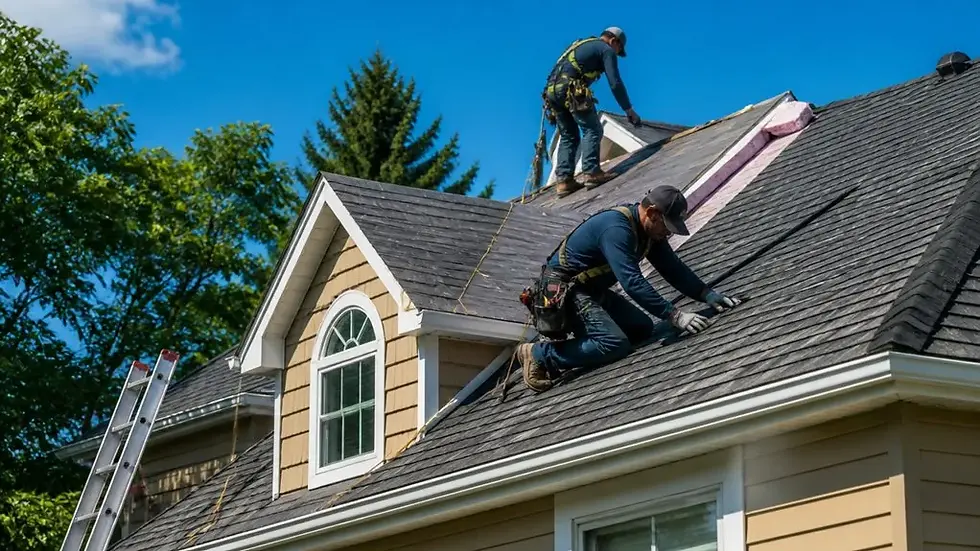
When considering a roof replacement in Totowa NJ, one common question is whether new shingles can be installed directly over the existing layer instead of removing the old roofing material.
While applying a second layer of shingles in New Jersey may seem cost-effective and faster, local building codes and best practices typically favor full removal. The added weight can stress the roof structure, potentially shortening the lifespan of a new roof.
Totowa New Jersey homeowners expect a durable and compliant roof. The roof replacement process in Totowa prioritizes thorough inspection and proper ventilation, ensuring these standards are met rather than taking shortcuts that could risk future issues.
What happens if bad decking turns up once the roof is already open?
Discovering damaged decking after the shingles and underlayment have been removed presents a significant challenge in roof replacement projects in Totowa NJ.
When bad decking is identified during roof decking inspection, New Jersey protocols require removal and replacement of compromised sections to preserve structural integrity.
This essential step prevents future leaks, rot, and mold that degrade roof durability.
Addressing bad decking extends labor time and costs due to additional demolition and installation.
Contractors also evaluate whether further reinforcement is necessary.
Once repaired, the roofing process resumes with new underlayment and materials installed on a stable, secure surface, ensuring long-term performance.
FAQ for Roof Replacement in Totowa NJ
Do we need to move out of the house while the roof is being replaced?
Although some stages of a roof replacement can generate noise and dust, the majority of homeowners in Totowa NJ do not need to vacate their residence during the project.
Professional crews schedule work to minimize disruption, allowing residents to remain in the home during roof replacement. Temporary noise and debris occur primarily during shingle removal and underlayment installation but are short-lived.
Moving out is generally unnecessary unless occupants have specific safety or allergy concerns. Given that most roof replacements complete within days, staying in the home during the process is both feasible and common.
What happens to the gutters, satellite dish and anything else fixed to the roof?
Since roof replacement involves stripping and rebuilding layers at the roof’s edges, gutters are temporarily removed and later reinstalled to maintain proper water drainage.
Satellite dishes and other roof-mounted equipment are carefully detached and stored to prevent damage during the process. These fixtures are inspected, and mounts or flashing are secured or replaced as needed to ensure stability.
Reinstallation occurs after roofing materials are in place, often requiring repositioning to accommodate new layers. This method safeguards the functionality and integrity of gutters, satellite dishes, and all roof-mounted equipment throughout the replacement project.
How is the garden and driveway protected from nails and torn-off debris?
To prevent damage and contamination from nails and torn roofing debris, contractors implement multiple protective measures over the garden and driveway before roof removal begins. Heavy-duty tarps and plastic sheeting are laid out to catch falling materials.
Debris catchers and drop cloths are strategically placed to control and collect loose shingles and fragments. Throughout the project, magnetic sweepers and pole-mounted magnets are regularly employed to retrieve nails from the ground, minimizing hazards.
Additionally, barriers seal off the work area to contain debris. A thorough post-project inspection and sweeping ensure the garden and driveway are free of residual nails and debris.
How Long Does It Take for Roofers to Put on a New Roof?
Roof installation typically spans one to three days, contingent on roof size, complexity, and weather. Initial removal, surface preparation, underlayment, and shingle application proceed sequentially, concluding with inspection and cleanup to ensure secure, compliant results.
OUR LOCATION
Get Your Free Roof Replacement Estimate Today!
Call (862) 271-1225 and we will come out, measure the roof properly and put a written scope in your hands: layers coming off, decking rate per sheet, materials, start date and expected finish. No deposit is asked for at the visit and the estimate is free. Licensed and insured in New Jersey under HIC #13VH13359900, working across Totowa and the surrounding towns.z
We work throughout Bergen and Passaic County. See the towns we serve, or contact us for a free estimate.
Related Services
-
Repair, replace or maintain
-
The roof systems we install
-
Attic ventilation
-
A targeted roof repair instead