
Have a Project in Mind? Contact Us Now
Call Us Now: (862) 271-1225
Email Us: njgoldstarconstruction@yahoo.com


Gutter Repair in Totowa NJ: Sags, Seams, Overflow and Fascia
A gutter that dips, drips at a seam or dumps water over the front edge is telling you something specific. This page walks through repairs to hangers, pitch, seams, outlets and the fascia board behind the run, and when patching stops being worth it. Call before the next downpour.

We Find Why It Overflows Before We Touch A Single Hanger
Cause Found Before Parts
Overflow has four common causes and they need different fixes. Blockage, lost pitch, an undersized run and a short drip edge all look identical from the driveway.
Pitch Reset And Water Tested
A rehung length gets water run down it on the spot. If it still holds a puddle at midspan, the brackets move again before we pack up.
Fascia Probed, Not Assumed
Hangers need wood that bites. We test the board behind the run for soft spots and spongy nail holes before anything is screwed back into it.
Repair Or Replace, Said Plainly
Patching a brittle run eventually costs more than swapping it. We show you the seam count, the hanger spacing and the fascia condition behind that call.

A VISIBLE DIP MIDWAY ALONG THE RUN
Sight down the gutter from one corner. A sag holding water after the rain stops means a hanger has let go or the board behind it is no longer holding a fastener.
DAYLIGHT BEHIND THE GUTTER BACK
A length pulling away from the fascia at one end leaves a visible gap. Water runs down behind the run into the board and the rafter tails rather than into the channel.
A DRIP LINE DOWN THE SIDING
A dark stripe running from one point on the gutter down the wall is a failed seam or end cap. It leaks in every rain, not just the heavy ones.
PEELING PAINT ON THE FASCIA BOARD
Blistered or flaking paint under the gutter line, sometimes with a stain running to the soffit, points to wet wood behind. Press it. If it gives, the board is going soft.
SIGNS YOU MAY NEED GUTTER REPAIR
Repairs announce themselves differently from a simple clog. The run is doing something it did not do last year, and the evidence stays behind after the rain stops. Four things worth walking outside to look at.
WHAT WE DO
OUR GUTTER REPAIR SERVICES
01
Rehanging And Repitching Runs
Sagging lengths come down, hangers get reset at closer centers, and the fall is re-established toward the outlet. Where old spikes and ferrules have worked loose in the fascia, hidden brackets go in instead, biting into fresh wood rather than an enlarged hole. The length is water tested before we call it done.
02
Seam, Corner And Cap Sealing
Leaking joints get stripped back to clean metal, dried and resealed rather than smeared over old failed compound. Mitered corners and end caps take the most movement and fail first. If the metal around a seam has gone brittle or pinholed, we tell you resealing will not hold and price the section instead.
03
Fascia Board Replacement
Rotted board behind the gutter gets cut out and replaced so hangers have something solid to hold. Where the rot has reached the rafter tails, those get addressed too, because a new board fastened to soft framing buys you a season at most. The run comes off and goes back on the same day where possible.
04
Downspout And Discharge Repairs
Crushed elbows, split spouts, pulled straps and undersized outlets all show up as overflow at one corner. We repair or swap the affected parts, then deal with where the water lands. Extensions carry discharge past the footing instead of dropping it at the foundation wall where it works back toward the basement.
The Benefits of Gutter Repair
-
Repairs stop the leak at its source, so a seam that has been marking your siding every rain quits doing it instead of being scrubbed off each spring.
-
Rehanging a run is a fraction of the cost of replacing it, and on sound metal with a solid fascia it is the right call rather than the cheap one.
-
Catching soft fascia early keeps the repair to a board. Left alone, the same leak works into rafter tails and soffit, and the job stops being a gutter job.
-
Correct pitch means the run empties itself between storms, which matters in February when standing water freezes and the weight of ice pulls on hangers that already failed once.
-
Discharge moved away from the footing takes pressure off the basement wall, and that is often the fix homeowners are actually after when they call about a gutter.
-
Storm damage handled promptly keeps a limb strike from turning into a whole-run replacement, since a bent section and two pulled hangers are still a repair.
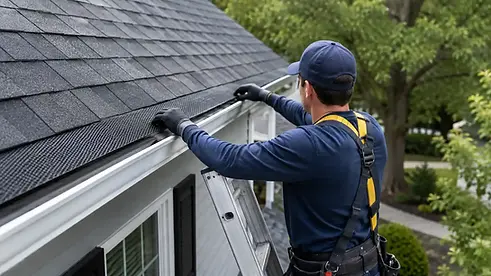
GUTTER REPAIR GUIDE
Gutter repair in Totowa NJ addresses sagging caused by weakened hangers or rotted fascia, which disrupts proper pitch and leads to water pooling. Seams require resealing to prevent leaks, while overflow typically results from blockages, misalignment, or undersized gutters. Fascia integrity is critical for secure gutter support and may need replacement if compromised. Timely rehangs with heavy-duty hangers restore function and prevent storm damage. Further insights reveal tailored solutions for these common issues under local conditions.
The Gutter Is Doing Something It Did Not Used to Do
A gutter exhibiting a mid-run dip that retains water post-rain indicates a loss of proper pitch, often due to compromised hangers or fascia shifts.
A seam producing a drip line along the siding or water flowing over the front edge suggests joint failure or undersized capacity.
A section pulling away from the fascia typically signals attachment hardware failure or wood deterioration.
Identifying the specific symptom is critical for determining whether repair or replacement is necessary to restore effective drainage.
A Run That Dips in the Middle and Holds Water After the Rain Stops
When a gutter run dips in the middle and retains water after rainfall, it signals a deviation from its original function of channeling water efficiently toward the downspouts. This common symptom often results from sagging caused by loose or deteriorated hangers, leading to an improper pitch.
The resulting water pooling not only undermines gutter performance but also risks rust, leaks, and fascia damage. Effective gutter sagging repair Totowa NJ specialists focus on re-pitching or re-hanging the affected sections to restore proper flow.
Recognizing and addressing water pooling gutter repair NJ needs promptly preserves structural integrity and prolongs gutter lifespan.
A Seam That Puts a Drip Line Straight Down the Siding
If gutter seams begin to channel water directly down the siding, this shift often signals misalignment or sagging within the gutter system. Typically, hangers loosen or fail, altering the gutter’s pitch and causing water to bypass downspouts.
This misdirection creates a drip line that can damage siding and foundation. Effective gutter seam leak repair involves inspecting and re-securing hangers, correcting the pitch, and resealing seams to restore proper flow.
For lasting results, sagging gutter repair Totowa NJ specialists recommend thorough evaluation to prevent recurrent water damage and preserve the home’s exterior integrity.
A Sheet of Water Coming Over the Front Edge in Every Downpour
Though gutters are designed to channel rainwater efficiently, the appearance of a continuous sheet of water spilling over the front edge during every downpour signals a disruption in this function.
Gutter overflow often results from clogged debris, improper pitch, or damaged seams obstructing water flow. Sagging sections create low points where water pools and spills prematurely.
Identifying the precise cause—whether blockage, lost pitch, or joint failure—is critical for effective gutter repair Totowa NJ professionals. Regular inspection and timely maintenance restore proper drainage, preventing water damage and preserving gutter integrity for the community’s homes.
A Length Pulling Away From the Fascia at One End
A gutter section pulling away from the fascia at one end typically signals compromised support due to loose or failed hangers, which may result from corrosion, mechanical damage, or prolonged exposure to stress factors like accumulated debris and standing water.
This gutter pulling away from house structures often exacerbates fascia rot behind gutter sections, weakening the timber and jeopardizing hanger stability. Identifying whether hangers are rusted, broken, or improperly pitched is essential.
Solutions include re-securing the gutter with reinforced brackets, correcting pitch to ensure proper drainage, and addressing any fascia rot behind gutter areas to restore structural integrity and prevent recurrence.
Overflow Is One Symptom With Four Different Causes
Overflow in gutter systems manifests similarly but can result from distinct underlying issues requiring targeted solutions. Identifying the precise cause is critical for effective repair and long-term functionality.
-
Blockage in the channel or at the downspout outlet
-
Pitch lost because a hanger let go
-
A run undersized for the roof area draining into it
-
Water tracking behind the gutter off a short drip edge
-
Blockage in the Channel or at the Downspout Outlet
Where does water go when gutter overflow occurs despite seemingly unobstructed channels? Often, a blockage within the channel or at the downspout outlet impedes flow, causing gutter overflow in heavy rain.
In Totowa, common culprits include accumulated leaves, debris, bird nests, and sediment buildup that restrict water passage. A blocked downspout Totowa residents encounter frequently leads to water backing up and spilling over the gutter edge.
Ensuring proper slope and conducting regular inspections and cleanings of channels and downspout outlets are essential preventive measures. Addressing these blockages promptly restores efficient drainage and protects the home’s exterior integrity.
Pitch Lost Because a Hanger Let Go
When gutter hangers fail or loosen, the resulting loss of pitch disrupts the intended slope necessary for proper water drainage, leading to pooling and overflow during rainfall. This compromised angle often stems from sagging caused by broken or improperly spaced hangers, which pull gutters away from the fascia.
A thorough gutter repair assessment Totowa involves inspecting hangers for damage or loosening and evaluating fascia integrity to prevent further deterioration.
Timely gutter hanger replacement Totowa restores correct pitch, ensuring effective water flow and protecting structural components.
Accurate diagnosis differentiates pitch loss from other overflow causes, guiding targeted repairs.
A Run Undersized for the Roof Area Draining Into It
Although multiple factors contribute to gutter overflow, insufficient gutter size relative to the roof area is a critical cause that often goes unnoticed. Inadequate capacity frequently leads to water spilling over the gutter’s front edge during heavy rainfall, risking fascia and foundation damage.
Effective gutter repair Totowa New Jersey professionals assess roof dimensions and rainfall intensity to determine proper gutter width—typically 4 to 6 inches. Solutions include upsizing gutters, adding downspouts, and verifying pitch for ideal flow.
Correctly addressing undersized runs ensures durable gutter overflow repair NJ, protecting homes from recurrent water damage and preserving structural integrity.
Water Tracking Behind the Gutter Off a Short Drip Edge
Water tracking behind the gutter often results from a short or improperly installed drip edge, which fails to direct runoff away from the fascia and gutter system. This condition can mimic a gutter leak but is primarily caused by water pouring over the gutter edge or seeping behind due to faulty drainage paths.
Contributing factors include incorrect gutter pitch, clogged downspouts, and damaged drip edges. Effective resolution requires precise inspection to identify these issues, followed by correcting gutter slope, clearing blockages, and properly extending or replacing the drip edge to ensure water is channeled away.
This helps protect the fascia and prevent structural damage.
What the Fascia Behind the Gutter Is Telling Us
The condition of the fascia behind the gutter directly impacts the effectiveness of hanger attachments. Soft or rotted board creates spongy nail holes and reduces structural support.
When rot extends to the rafter tails, it signals advanced deterioration requiring thorough carpentry intervention beyond standard gutter repair.
Accurate assessment of fascia integrity is essential to determine whether repair or full replacement is necessary to restore proper gutter function.
Soft Board, Spongy Nail Holes and Hangers With Nothing to Bite
A fascia board exhibiting softness or sponginess, coupled with enlarged or deteriorated nail holes, signals advanced wood rot caused by persistent moisture exposure. This deterioration compromises the structural integrity, leaving gutter hangers with insufficient material to secure a proper grip.
For homeowners seeking gutter fascia and soffit repair Totowa, addressing these symptoms promptly is critical to prevent sagging gutters and further water intrusion. Effective gutter repair or replacement Totowa must assess fascia condition thoroughly, replacing compromised sections to restore attachment points and ensure system stability.
Timely intervention preserves exterior integrity and prevents escalating repair complexity.
Rot That Has Already Reached the Rafter Tails
When moisture infiltrates the fascia board behind a gutter, it often progresses beyond surface damage, compromising the rafter tails beneath.
Rot behind gutter structures manifests as softened wood, peeling paint, and sagging fascia boards, signaling advanced decay. This deterioration weakens gutter attachment points, causing sagging or detachment.
It may also produce mold or musty odors, indicating rot has reached critical framing elements. Effective fascia board repair NJ requires prompt assessment and carpentry intervention to replace compromised timber.
Restoring structural integrity and ensuring secure gutter support is essential. Addressing this rot preserves roof stability and prevents costly, extensive damage.
Repairs Carried Out on an Existing Run
Repairs on an existing gutter run address specific symptoms such as leaks, sagging, and overflow by targeting component failures or installation flaws. Common interventions include resealing joints, rehanging with improved support, and replacing compromised fascia or downspout elements. The following table summarizes key repair actions and their technical focus areas.
Repair Action | Technical Focus
Resealing Seams and Corners | Leak prevention
Rehanging and Repitching | Correcting sag and drainage
Swapping Spikes for Hidden Brackets | Enhanced structural support
Fascia Board Replacement | Restoring gutter attachment
Downspout and Elbow Repairs | Ensuring unobstructed flow
Resealing Seams, End Caps and Mitered Corners
Seams, end caps, and mitered corners represent critical junctions in gutter systems where water leakage is most likely to occur due to joint movement, material wear, or sealant degradation. Effective gutter seam sealing NJ addresses these vulnerabilities by applying specialized sealant after thorough cleaning and drying, ensuring a durable, watertight bond.
This targeted leaking gutter repair New Jersey method prevents overflow, sagging, and fascia water intrusion without full system replacement. By maintaining ideal water flow and reinforcing these joints, resealing extends gutter lifespan and safeguards the structural integrity of homes.
Rehanging and Repitching a Sagging Length
Following the restoration of watertight joints in seams, end caps, and mitered corners, attention often shifts to gutters exhibiting sagging or improper pitch along their runs. A gutter rehang addresses these issues by adjusting or replacing hangers to restore alignment and ensure effective gutter slope correction.
Proper slope directs water toward downspouts, preventing pooling and overflow. Technicians carefully remove and reposition existing supports, often installing heavier fasteners for durability. This process, typically completed within 1-2 hours per length, includes inspection for fascia integrity.
Gutter rehang and slope correction offer a cost-effective solution, extending gutter lifespan without full replacement.
Swapping Spikes and Ferrules for Hidden Brackets
When gutters show signs of loosening or sagging due to aging spikes and ferrules, replacing these fasteners with hidden brackets provides a more secure and durable mounting solution.
This method involves detaching the gutter, removing loose gutter spikes, and installing brackets behind the gutter lip. Doing so enhances support and maintains proper pitch.
Hidden brackets reduce risks of rust and corrosion common with spikes, minimizing gutter end cap leak potential.
By evenly distributing the gutter’s weight along the fascia, hidden brackets prevent sagging and pull-away issues.
This approach thereby extends the lifespan of existing gutter runs while improving overall system performance.
Fascia Board Replacement Behind the Gutter
Replacing spikes and ferrules with hidden brackets can stabilize gutter mounts, but underlying fascia deterioration often remains an unseen issue. Fascia board repair Totowa addresses this by carefully detaching gutters to replace rotted or damaged fascia behind the existing run.
This targeted intervention preserves the original gutter system while restoring secure attachment points, preventing sagging, detachment, and water infiltration.
Technicians also inspect adjacent roof decking and soffit for hidden damage. When deterioration is extensive, gutter section replacement NJ may be necessary to maintain system integrity.
This approach balances repair efficiency with long-term structural protection.
Downspout, Elbow and Outlet Repairs
Downspout, elbow, and outlet repairs on an existing gutter run focus on restoring the integrity of key components that channel water away from the roof and foundation.
Downspout repair addresses damage, clogs, or disconnections that disrupt water flow, while elbow repairs ensure secure, leak-free junctions preventing overshoot.
Outlet repair is critical to direct runoff efficiently, minimizing erosion and basement flooding risks.
These targeted fixes maintain system efficiency and prolong gutter lifespan without full replacement.
For homeowners in Totowa NJ seeking durable solutions, precise assessment and repair of these elements are essential to resolving overflow symptoms effectively.
Extensions That Move Discharge Off the Footing
Although gutter systems effectively channel rainwater off the roof, improper discharge location can lead to water pooling near the foundation, promoting soil erosion and basement flooding.
Installing a gutter extension on an existing run redirects water at least 3 to 4 feet away from the footing, enhancing foundation protection.
Technicians often retrofit downspouts with flexible or rigid extensions, ensuring efficient water movement away from vulnerable areas.
This targeted repair addresses overflow symptoms by moving discharge off the footing, reducing moisture-related damage risk.
As a cost-effective solution, gutter extensions considerably improve overall system performance while safeguarding the home’s structural integrity.
The Line Where Patching a Run Starts Costing More Than Replacing It
When repeated patching of a sagging or leaking gutter run becomes necessary, the cumulative costs of labor and materials can exceed those of a full replacement. Determining when to replace a gutter run involves evaluating the extent of damage, underlying fascia integrity, and frequency of repairs.
While a gutter patch or replace decision may initially favor patching minor seams, escalating repairs often reveal deeper structural issues better resolved through replacement. Installing a seamless system eliminates multiple leak points, reduces labor over time, and ensures consistent drainage performance—making replacement the more economical, durable solution for Totowa homeowners facing ongoing gutter failures.
Why Two Gutter Repairs on the Same Totowa Street Are Not the Same Job
While two gutter repairs may occur on the same Totowa street, the underlying conditions and required interventions often differ substantially.
Each gutter repair Totowa project demands a tailored approach based on specific factors, such as:
-
Extent of damage: minor leaks versus extensive sagging
-
Material condition: intact sections versus rot-compromised fascia
-
Repair scope: quick gutter joint repair or full section replacement
-
Age and design: newer installations versus aged systems needing overhaul
-
Repairs in Freezing Weather and What Has to Wait for a Thaw
In freezing weather, gutter repairs must be carefully prioritized to prevent exacerbating existing damage while accommodating material limitations. Minor interventions in gutter repair Totowa focus on sealing leaks and securing loose sections to maintain integrity during cold conditions.
However, more extensive work, such as replacing rusted or severely damaged components, should be deferred until thawing to ensure proper adhesion and material performance. Ice buildup inside gutters impedes drainage and complicates repairs, making it essential to postpone addressing storm damaged gutters Totowa NJ until safer, ice-free conditions prevail.
Safety concerns from slippery surfaces further necessitate delaying invasive repairs until warmer weather.
Storm, Limb and Ladder Damage After a Passaic County Blow
Severe weather events in Passaic County frequently result in gutters suffering from various forms of physical damage, including sagging, detachment from fascia boards, and structural deformation such as dents and cracks.
Limb damage gutter NJ is common when falling branches loosen hangers or bend gutter runs, while ladder mishandling post-storm can exacerbate misalignment or detach sections.
High winds also stress seams and joints, causing leaks and overflow.
Effective gutter repair Totowa requires thorough post-storm inspection to identify compromised fascia or broken hangers, ensuring targeted restoration that addresses both immediate drainage issues and underlying structural concerns.


Why does a gutter overflow in heavy rain when it has just been cleared?
Although gutters may appear clear after routine cleaning, overflow during heavy rain often indicates underlying issues such as improper pitch, inadequate capacity, or compromised structural integrity.
In Totowa NJ, gutter overflow frequently results from lost slope due to failed hangers or sagging sections where water pools and spills. Additionally, downspouts may be clogged or undersized, unable to handle heavy runoff despite a clean gutter.
Addressing these factors is vital in effective gutter repair Totowa projects. Diagnosing overflow causes beyond debris clearance ensures targeted solutions, preventing recurring water damage and promoting system reliability during intense storms.
Can a gutter that has pulled away from the fascia be rehung rather than replaced?
A gutter that has pulled away from the fascia can frequently be rehung instead of replaced when the gutter material remains intact and the fascia board provides sufficient structural support.
In gutter repair Totowa, this process involves installing new, heavier-duty hangers or brackets to securely reattach the gutter separated from fascia. Adjusting the pitch during rehanging ensures proper drainage, preventing recurrence.
However, if the fascia or existing hangers show damage or rot, addressing those issues is critical before rehanging.
A professional evaluation determines whether rehanging offers a durable, cost-effective solution versus full replacement.
FAQ for Gutter Repair in Totowa NJ
Does rotted fascia have to be dealt with before new hangers can go in?
Rehanging gutters securely depends heavily on the condition of the fascia board supporting the hangers. Rotted fascia board repair Totowa is essential before installing new hangers to ensure a stable, long-lasting gutter system.
Installing hangers directly onto compromised fascia risks further deterioration and gutter failure. Proper support requires a solid, dry surface; otherwise, hangers may loosen or pull away over time.
Skilled technicians prioritize fascia inspection, addressing rot promptly. This often involves replacing gutter spikes with hidden hangers anchored into sound wood, enhancing durability and preventing water intrusion that accelerates decay behind gutters.
Will resealing a leaking seam hold, or does that length need swapping out?
When evaluating a leaking seam in a gutter system, the decision to reseal or replace hinges on the condition of the gutter material and the extent of the damage.
A mitered corner gutter leak often stems from compromised seams or brittle material. Gutter sealant repair New Jersey professionals recommend resealing only if the gutter remains structurally sound and the leak is isolated.
Cracks, corrosion, or brittleness necessitate swapping out the affected length for a durable fix. While resealing offers a temporary solution, replacing sections ensures long-term integrity, preventing recurrent leaks and maintaining system performance.
Is there any point booking gutter repairs in the middle of winter?
Although gutter repairs can be initiated during winter in Totowa NJ, the effectiveness of these interventions is often compromised by frozen debris, ice dams, and brittle metal caused by low temperatures.
Winter gutter repair faces challenges such as difficulty re-hanging gutters due to ice and snow accumulation, which impedes restoring proper pitch. Consequently, many professionals specializing in gutter repair Totowa recommend deferring routine maintenance until spring, ensuring accurate water flow testing and durable fixes.
Emergency repairs remain viable during winter storms, but for the most favorable long-term performance, scheduling non-urgent gutter repairs in milder conditions is the advised approach.
How to Fix a Gap Between a Gutter and Fascia?
To fix a gap between gutter and fascia, secure or replace deteriorated hangers with heavy-duty brackets, adjust gutter pitch for proper drainage, install foam padding or sealant behind the gutter, and perform regular maintenance to prevent recurrence.
OUR LOCATION
Get Your Free Gutter Repair Estimate Today!
Point us at the corner where the water is coming over, or the stripe on the siding, and we will work back from there to the cause. NJ Gold Star Construction takes calls at (862) 271-1225 for gutter repairs across Bergen and Passaic County. The estimate is free, and you will hear plainly whether the run is worth rehanging or worth replacing.
We work throughout Bergen and Passaic County. See the towns we serve, or contact us for a free estimate.