


Signs of Improper Gutter Installation in Ocean County, NJ
- Cheridan Hojas
- Jan 7
- 8 min read

Updated: Feb 13

The most common signs of improper gutter installation are water overflowing during rain, gutters pulling away from the house, leaks at seams, standing water inside the gutter, and downspouts that release water too close to the foundation.
When gutters show these signs, they are not draining water correctly and can quickly lead to roof damage, siding rot, foundation cracks, and basement leaks.
In Ocean County, NJ, these warning signs tend to appear sooner due to frequent storms, coastal winds, and high humidity.
Based on inspections and repair work performed by NJ Gold Star Construction across New Jersey, many gutter failures come from incorrect slope, poor hanger spacing, or improper downspout placement rather than material defects.
This guide breaks down the signs homeowners should watch for and explains why addressing them early helps prevent costly structural repairs.
Why Proper Gutter Installation Is Essential for Ocean County Homes?
Correct gutter installation matters in Ocean County because homes here deal with heavier rain, strong coastal winds, and high humidity for much of the year.
When gutters are installed the right way, they move rainwater safely away from the roof, siding, and foundation. When they are not, water ends up where it should never be.
Improperly installed gutters often allow water to overflow, drip behind the fascia, or pool near the foundation. Over time, this can lead to roof edge rot, peeling siding, soil erosion, foundation cracks, and basement leaks.
These problems tend to show up faster in Ocean County due to frequent storms and moisture exposure.
From on-site inspections handled by NJ Gold Star Construction, many gutter failures are caused by simple installation errors, such as incorrect slope, loose hangers, or downspouts placed too close to the home.
In many cases, homeowners benefit from professional gutter services that ensure proper setup from the start rather than repeated repairs later.
Getting the installation right from the start helps protect your home’s structure and avoids costly repairs later.
Top Signs of Improper Gutter Installation
Below are the most common warning signs homeowners notice when gutters are not installed correctly. Each sign explains what you’ll see, why it points to improper installation, and the damage it can cause.
1. Water Overflow During Rain
When gutters overflow during normal rainfall, it usually means water is not moving efficiently toward the downspouts. This is often one of the first signs homeowners notice when gutter installation and repair issues are present.
You may notice sheets of water spilling over the front edge or dripping behind the gutter. This often happens when gutters are installed without the proper slope, are too small for the roof size, or when downspouts are poorly positioned.
Over time, overflowing water can stain siding, wash away soil, and allow moisture to seep into the basement or foundation walls.
Potential damage: Siding stains, soil erosion, basement leaks, and foundation problems.
2. Sagging or Detached Gutters
Sagging gutters or sections pulling away from the home are a strong sign of installation problems. This usually occurs when hangers are spaced too far apart, fastened into weak wood, or not secured into the fascia correctly.
As gutters sag, water collects instead of draining, which adds extra weight and worsens the problem. Left uncorrected, this can lead to gutter collapse, fascia damage, and safety hazards during storms.
Potential damage: Complete gutter failure, roof edge damage, and falling sections during storms.
3. Leaks at Seams, Joints, or Corners
Water dripping from seams or corners often points to poor sealing or improper connections during installation. While small leaks may seem harmless, they allow water to escape repeatedly in the same spots and can eventually contribute to roof leaks and solutions becoming a concern for homeowners.
Over time, this constant moisture can erode soil, damage siding, and weaken the foundation near those leak points. Seam leaks are common when gutters are rushed during installation or assembled without proper overlap.
Potential damage: Foundation erosion, mold growth, and water damage near entry points.
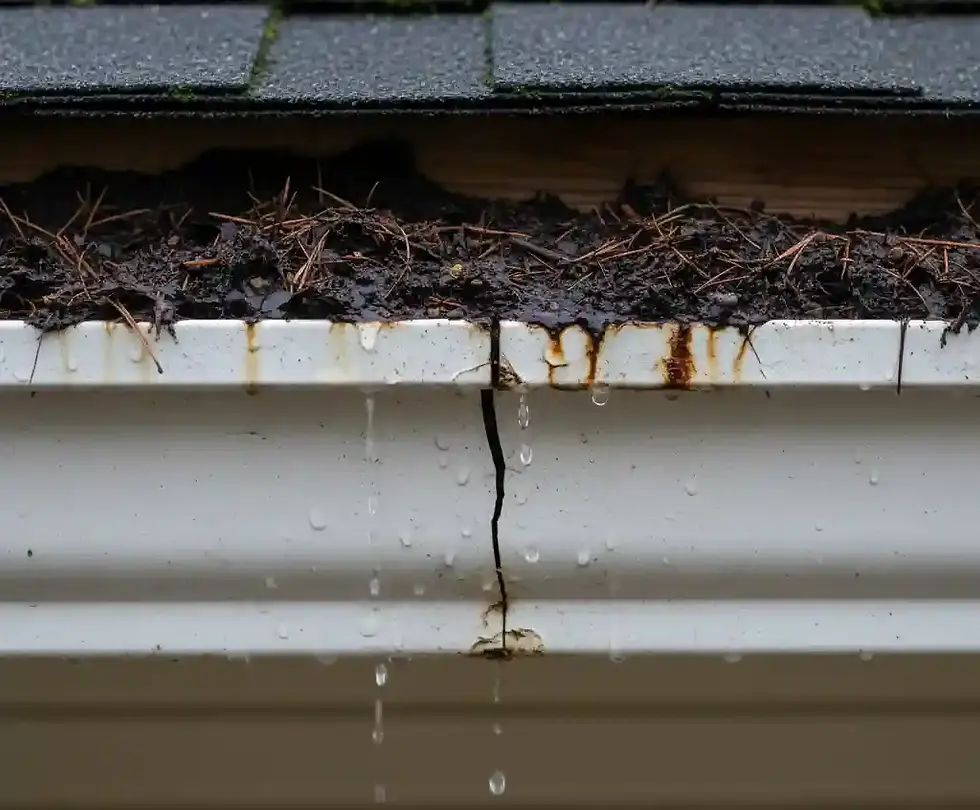
4. Standing Water Inside Gutters After Rain
If water remains in the gutter long after rain has stopped, the system is not pitched correctly. Gutters should have a slight, consistent slope toward the downspouts.
Standing water adds weight, attracts insects, and accelerates corrosion. In colder months, trapped water can freeze and expand, increasing the risk of cracks or joint separation.
Potential damage: Mosquito breeding, rust, algae growth, and weakened gutter material.
5. Water Pooling Near the Foundation
Puddles or soggy soil around the base of the home are often caused by gutters that fail to move water far enough away. This usually results from improper downspout length, poor placement, or missing extensions.
When water repeatedly collects near the foundation, it can lead to cracks, settling, basement leaks, and long-term structural concerns.
Potential damage: Foundation cracks, basement moisture, and structural shifting.
6. Improper Downspout Placement
Downspouts that empty too close to the house, onto walkways, or toward the foundation indicate installation mistakes. Downspouts should guide water at least several feet away from the home.
Poor placement causes water to flow back toward the structure, increasing the risk of slippery surfaces, erosion, and interior moisture problems.
Potential damage: Slab damage, icy walkways, and interior water intrusion.
7. Rust, Corrosion, or Early Deterioration
Visible rust or corrosion often appears when water sits in the gutter instead of draining properly. This can happen when the gutter slope is incorrect or when low-quality materials are used in areas exposed to constant moisture.
In Ocean County’s humid and coastal environment, these issues develop faster and shorten the lifespan of the gutter system.
Potential damage: Shortened gutter lifespan and sudden failures during storms.
8. Peeling Paint or Rotted Fascia
Peeling paint along the roofline or soft, rotting wood behind the gutters is a sign that water is escaping behind the gutter rather than flowing through it.
This usually happens when gutters are installed too high, too low, or without proper flashing. Fascia damage can spread quickly and often requires more extensive repairs if ignored.
Potential damage: Costly fascia repairs and possible roof edge rot.
9. Frequent Clogging That Isn’t Just Debris
If gutters clog often, even after cleaning, the issue may not be leaves or debris alone. Improper slope, poor alignment, or incorrect downspout positioning can prevent debris from washing out naturally.
This causes repeated blockages, added gutter weight, and frequent overflow during rainstorms.
Potential damage: Overflow, added weight on gutters, and early system failure.
10. Pest Activity Around Gutters
Standing water, gaps, and loose sections created by improper installation attract insects, birds, and rodents.
Mosquitoes are drawn to pooled water, while birds and small animals nest in sagging or separated gutter areas. Pest activity often signals drainage or alignment problems that should be addressed promptly.
Potential damage: Blockages, additional water issues, and damage to surrounding materials.
Many of these issues are commonly identified during home inspections performed by NJ Gold Star Construction, where gutter problems are often traced back to installation errors rather than age alone.
Local Ocean County Gutter Problem Examples (Real-World Context)
Homeowners in Ocean County deal with water every year, and when gutters don’t work the way they should, the effects show up fast. Below are real patterns and situations that people in local communities have experienced.
These examples are not promotional but are based on real homeowner reports, regional weather history, and common issues found in the area.
Overflow & Basement Water Intrusion
In online homeowner groups for Toms River and other Ocean County areas, residents frequently describe situations where heavy rains cause gutters to overflow instead of channeling water away from the home.
In several cases, rainwater backed up and entered basements, leading to water stains and interior dampness. These problems typically occur when gutters are not pitched correctly or are clogged, forcing water to spill over the edge rather than flow through the downspouts.
Standing Water and Soil Erosion
Many Ocean County properties have soil that becomes saturated quickly after storms, especially near the foundation. Homeowners often report standing water around foundations or soft, muddy ground that doesn’t dry out days after rain.
This usually indicates that gutters and downspouts are not redirecting water far enough away from the house, leading to erosion near the base of the structure.
Impact from Major Storm Events
Ocean County has a history of significant storm activity, most notably from events like Hurricane Sandy, which inundated communities along barrier islands and the mainland alike with floodwaters and wind-driven rain.
While much of the documented damage was from storm surge, many homes inland also experienced water entering through weak points, including roof edges and poorly functioning drainage systems, highlighting how intense coastal weather can magnify the effects of improper water management.
Clogging and Pest Issues
Because Ocean County has both coastal zones and wooded neighborhoods, gutters often fill with leaves, twigs, and debris that block water flow.
Homeowners in these regions frequently find that clogged gutters overflow close to the home or hold standing water, which attracts insects like mosquitoes and pests seeking shelter.
Problems like these are common in humid environments where water remains in place rather than draining correctly.
These examples show that gutter problems are common in Ocean County homes when gutters are not installed or cared for properly. Catching these issues early helps prevent water damage, soil erosion, and costly structural repairs.
How Improper Gutters Damage Your Home?
When gutters are not installed correctly, water does not go where it should. Instead of protecting your home, it slowly causes damage in areas that are expensive and difficult to repair.
Foundation issues: Water pooling near the base of the home can seep into small cracks, weaken the foundation, and lead to long-term structural problems.
Siding and roof damage: Overflowing or leaking gutters allow water to run behind siding and along roof edges, causing rot, mold, and premature material failure.
Interior water intrusion: Poor drainage can push moisture into basements, crawl spaces, and walls, leading to stains, dampness, and mold growth.
Landscape erosion: Uncontrolled runoff washes away soil, damages flower beds, and can undermine walkways and driveways around the home.
When to Repair vs Replace Gutters?
Knowing whether to repair or replace your gutters depends on a few key factors: how old the system is, how severe the damage is, and how often problems keep coming back.
If your gutters are fairly new and the issues are limited to small leaks, loose hangers, or minor alignment problems, repairs are usually enough. These fixes address installation errors without replacing the entire system and are often the most cost-effective option.
Replacement makes more sense when gutters are older, heavily corroded, pulling away in multiple sections, or causing repeated water problems despite repairs.
If installation mistakes are widespread, replacing the system ensures proper slope, secure fastening, and correct downspout placement from the start. While replacement costs more upfront, it often saves money over time by preventing ongoing damage and repeat repairs.
Catch Gutter Problems Before They Cause Damage
Improper gutter installation can quickly lead to water damage, foundation issues, and interior leaks, especially in Ocean County’s wet and coastal climate. Signs like overflowing water, sagging gutters, and poor drainage should never be ignored.
With hands-on experience inspecting New Jersey homes, NJ Gold Star Construction helps homeowners identify gutter problems early and prevent costly repairs.
If you are noticing any of these warning signs, scheduling a professional gutter inspection is the best way to protect your home and avoid bigger issues later.
FAQs About Improper Gutter Installation
How far should gutters extend from the roof edge?
Gutters should sit just below the roof edge so rainwater flows directly into them without overshooting. If they are installed too high or too low, water can miss the gutter and run behind it, leading to fascia and siding damage.
Can poor gutter installation cause basement leaks?
Yes. When gutters overflow or downspouts release water too close to the foundation, moisture can seep into basement walls or through foundation cracks, especially during heavy rain.
How much pitch should gutters have?
Gutters should slope about a quarter inch for every ten feet toward the downspout. This slight angle allows water to drain properly without pooling inside the gutter.
How often should gutters be inspected?
Gutters should be inspected at least twice a year, usually in the spring and fall, and after major storms. Regular inspections help catch installation problems before they cause serious damage.


Comments